Contents:
- Why Realistic Faux Flowers Are Having a Moment
- The 8 Best Artificial Flowers That Look Real
- Nearly Natural 5-Stem Silk Rose Bush
- Afloral Faux Garden Peony Stem
- SARO Life Velvet Magnolia Branch
- CB2 Faux White Orchid in Pot
- Primrue Artificial Lavender Stems (Set of 12)
- Cote Noire Soap Flower Bouquet
- Anthropologie Faux Wildflower Bunch
- Winward Silks Sunflower Stem
- Side-by-Side Comparison: Best Artificial Flowers at a Glance
- Budget Breakdown: What to Expect at Every Price Point
- How to Choose the Best Realistic Artificial Flowers for Your Space
- Match the Material to the Use Case
- Choose Stems with Wired Construction
- Prioritize Color Variation Over Solid Color
- Consider Your Lighting
- Common Mistakes to Avoid When Buying Faux Flowers
- Care and Longevity: Getting the Most From Faux Blooms
- Frequently Asked Questions
- What are the most realistic artificial flowers available?
- How can I make artificial flowers look more real?
- Are expensive artificial flowers worth it?
- Do artificial flowers fade over time?
- Can artificial flowers be used outdoors?
- Your Next Step
You reach out to touch the roses on your neighbor’s kitchen table — and they’re fake. That moment of surprise is the benchmark every artificial flower brand chases. Finding the best artificial flowers that look real has never been easier, but the market is crowded with options ranging from $5 dollar-store bunches to $80 designer stems. This guide cuts through the noise with specific picks, honest trade-offs, and everything you need to shop with confidence.
Why Realistic Faux Flowers Are Having a Moment
Allergy rates are rising — roughly 25 million Americans suffer from hay fever — and maintenance-free home décor is a growing priority for busy households. High-quality silk and polyester technology has advanced dramatically since the stiff, glossy imitations of the 1990s. Today’s best faux blooms incorporate real botanical molds, hand-painted gradients, and textured petals that fool florists. They’re also a legitimate design tool: interior stylists use them on photo shoots precisely because they photograph indistinguishably from fresh cuts.
Regional preferences shape buying decisions in interesting ways. Homeowners in the Northeast, where brutal winters make fresh flowers expensive and short-lived, lean toward year-round faux arrangements in deep burgundies and evergreens. In the South, front-porch wreaths and magnolia arrangements dominate — durability in heat and humidity matters most. On the West Coast, especially in California, buyers gravitate toward airy, neutral-toned pampas grass and dried-look eucalyptus that match the region’s organic-modern aesthetic.
The 8 Best Artificial Flowers That Look Real
1. Nearly Natural 5-Stem Silk Rose Bush
Nearly Natural has built a two-decade reputation on botanical accuracy, and this rose bush delivers. Each stem measures approximately 23 inches tall and features individually wired petals you can bend and reshape — a feature that separates premium faux flowers from rigid budget alternatives. The petals use a multi-layered silk blend with subtle color variation from deep crimson at the base to soft blush at the edges, mimicking the natural gradient of a garden rose. Works beautifully as a standalone vase arrangement or trimmed for a wreath. Available in 14 colorways. Price: $28–$34 per set.
2. Afloral Faux Garden Peony Stem
Afloral sources many of its stems from high-end European suppliers, and the difference is visible. Their garden peony stem ($14–$18 each) features a lush, 4-inch bloom head with tightly packed inner petals surrounded by looser outer petals — anatomically accurate to real peonies. The stem is a realistic green with visible leaf veining, and the leaves have a slight waxy finish that mimics fresh foliage. Ideal for centerpieces and bridal arrangements. One stem paired with two eucalyptus sprigs creates a convincingly fresh-looking bud vase. Slightly stiffer than real peonies but photographically undetectable.
3. SARO Life Velvet Magnolia Branch
Magnolias are notoriously difficult to fake — the large, creamy blooms and distinctive rubbery petals are immediately recognizable. SARO Life cracks this with a velvet-touch coating that replicates the waxy feel of real magnolia petals to an uncanny degree. The branch spans 28 inches with two full blooms and realistic brown bark texture. Southern homeowners with traditional or farmhouse interiors rate this as the most convincing single-stem purchase under $25. One limitation: the leaves can look slightly flat compared to fresh specimens, so pairing with real greenery or eucalyptus fills the gap.
4. CB2 Faux White Orchid in Pot
Orchids are the ultimate test of artificial flower realism. CB2’s potted phalaenopsis comes in a ceramic pot with faux moss and features translucent petals with hand-painted venation — the delicate line patterns inside real orchid blooms. At $49, it’s an investment, but a real phalaenopsis costs $20–$35 and lasts 8–12 weeks before dropping its blooms. This faux version is indefinite. The stems are adjustable wire, so you can recreate that natural slight-droop that real orchid spikes develop. Particularly convincing under warm ambient lighting. Not recommended for outdoor use — UV exposure will fade the translucent petals within one season.
5. Primrue Artificial Lavender Stems (Set of 12)
Lavender is one of the most forgiving subjects for artificial reproduction — its small, dense florets and muted purple tones are easier to replicate than large, complex blooms. Primrue’s set of 12 stems ($22) delivers exceptional value: each 17-inch stem has realistic branching, and the florets have a subtle texture rather than a uniform molded look. They work especially well in rustic pitchers, dried arrangements, and bathroom displays. At under $2 per stem, this is the smart budget buy for anyone filling large vases or making wreaths. The scent-free quality is a bonus for fragrance-sensitive households.
6. Cote Noire Soap Flower Bouquet
Technically not silk, Cote Noire’s soap roses occupy a premium niche: each petal is hand-shaped from scented soap, creating an entirely different tactile experience. Up close, they look startlingly real and carry a light fragrance for 6–12 months. A 12-stem bouquet runs $65–$85 depending on colorway. These aren’t for outdoor use or high-humidity rooms — soap petals will soften. But for gift-giving or a bedroom display, they’re the most luxurious option on this list and the one most likely to genuinely fool a first-time observer. A conversation piece as much as a decoration.
7. Anthropologie Faux Wildflower Bunch
Where most faux flowers aim for perfection, Anthropologie’s wildflower bunches lean into imperfection — slightly irregular petal shapes, varying stem heights, and a mix of species (cosmos, anemones, and scabiosa) that mimics the randomness of a garden cutting. The 20-inch bunch retails for $38 and is best displayed loosely in a wide-mouthed ceramic or glass vase. The color saturation is vivid without being plastic-looking. These work exceptionally well in cottagecore, maximalist, and eclectic interiors. The wired stems allow full customization of the arrangement. One note: the smaller florets can lose petals if handled roughly during reshaping.
8. Winward Silks Sunflower Stem
Sunflowers seem simple but most faux versions fail on the center disc — that dark brown, textured seed head is difficult to replicate without looking like hard plastic. Winward Silks uses a flocked center technique that gives the disc a genuinely rough, organic texture. Stems are 28 inches, and the petals have a slight crinkle rather than a uniform smooth surface. At $16–$22 per stem, they’re mid-range in price but top-tier in realism. They hold up well in outdoor-adjacent spaces like covered porches, which is a meaningful advantage for summer entertaining. Widely available through specialty floral suppliers and online.
Side-by-Side Comparison: Best Artificial Flowers at a Glance
| Product | Price Range | Material | Best For | Outdoor Safe? |
|---|---|---|---|---|
| Nearly Natural Silk Rose Bush | $28–$34 | Silk blend | Classic arrangements | No |
| Afloral Garden Peony | $14–$18/stem | Polyester silk | Bridal, centerpieces | No |
| SARO Life Magnolia Branch | $20–$25 | Velvet-touch polyester | Southern/farmhouse décor | No |
| CB2 Faux Orchid in Pot | $49 | Polyester/wire | Modern, minimalist | No |
| Primrue Lavender Set (12) | $22/set | Polyester | Budget fills, wreaths | Partial |
| Cote Noire Soap Bouquet | $65–$85 | Soap | Gifting, bedrooms | No |
| Anthropologie Wildflower Bunch | $38 | Polyester/wire | Eclectic, cottagecore | No |
| Winward Silks Sunflower | $16–$22/stem | Silk/flocked center | Porches, seasonal | Partial |
Budget Breakdown: What to Expect at Every Price Point
Realistic faux flowers span a surprisingly wide price range, and quality doesn’t always correlate with cost in a linear way.
- Under $15: Single stems or small bundles. Expect uniform petal coloring and less flexibility. Adequate for wreaths and filler greenery but unconvincing up close.
- $15–$35: The sweet spot. Most of the picks on this list fall here. You get botanical accuracy, wired stems, and realistic color gradients. Sufficient for dining tables and bookshelves where guests will look but not necessarily touch.
- $35–$60: Premium single statements — a potted orchid, a designer wildflower bunch. The materials are noticeably superior: heavier, better-textured, and more convincing from all angles.
- $60+: Luxury territory. Soap flowers, hand-assembled designer arrangements, or large-scale botanical installations. Appropriate for gifts, wedding décor, or curated interior design projects.
A realistic table centerpiece that reads as fresh-cut can be assembled for $45–$60 using a mix of two mid-range peony or rose stems, three eucalyptus sprigs (available from most craft stores at $4–$6 each), and a simple ceramic vase.
How to Choose the Best Realistic Artificial Flowers for Your Space
Match the Material to the Use Case
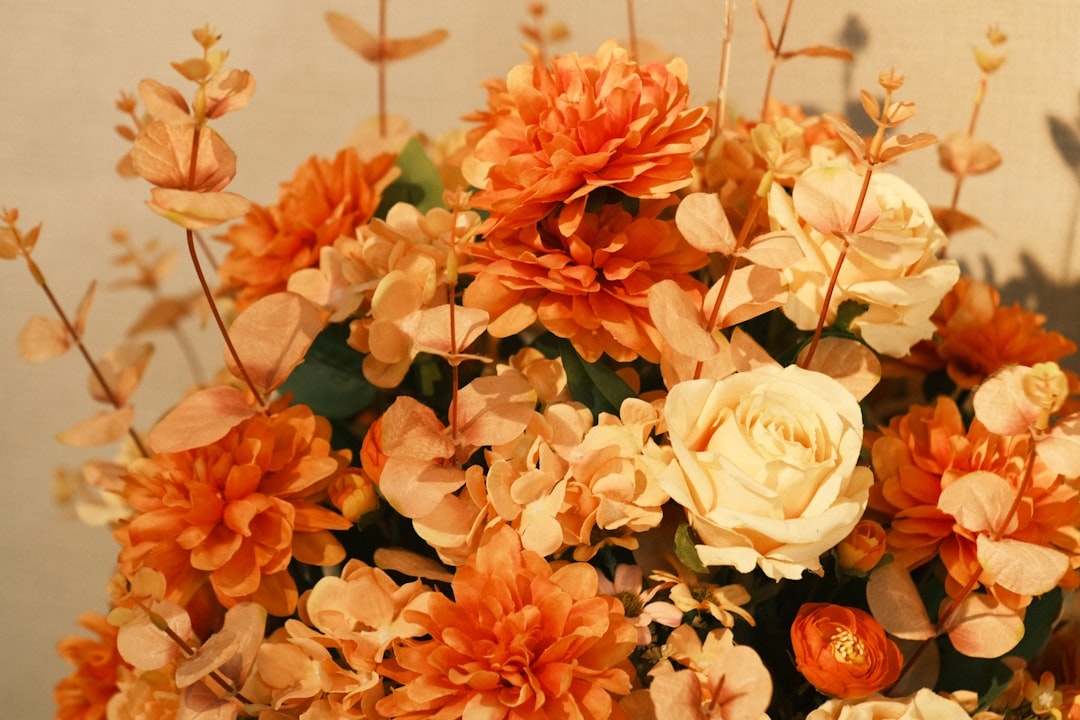
Silk and polyester blends are the most versatile — they handle indoor humidity, resist dust better than open-weave fabrics, and come in the widest color range. Velvet-touch finishes work well for large, dramatic blooms like magnolias and dahlias. For outdoor or semi-outdoor use, look specifically for UV-resistant polyester; most products will state this in the product description. A stem rated for outdoor use will typically retain color for 12–18 months in direct sun before fading begins.
Choose Stems with Wired Construction
This single feature separates realistic faux flowers from decorative props. Wired stems allow you to curve, bend, and position each element the way a florist would — nothing gives away a fake arrangement faster than uniform, rigid stems at identical angles. Check product listings for phrases like “fully wired” or “poseable wire stem.”
Prioritize Color Variation Over Solid Color
Real flowers have tonal variation — lighter edges, darker centers, subtle bruising on outer petals. Faux flowers with a single uniform color read as artificial immediately. Look for product photos taken in natural light, which reveals color gradient more honestly than studio white-background shots.
Consider Your Lighting
Low warm lighting (2700–3000K bulbs) is the great equalizer — it flattens detail and makes faux flowers much harder to detect. Bright daylight or cool white lighting (5000K+) is far more revealing. If your space gets a lot of natural light, invest in the higher-quality options on this list. A $22 lavender set looks convincing under a warm pendant light; it may not under a skylight.
Common Mistakes to Avoid When Buying Faux Flowers
- Buying all one species. Real arrangements mix bloom types, sizes, and greenery. An all-rose or all-peony vase looks staged. Combine a hero flower with two filler types for a natural result.
- Ignoring stem length. Buying stems that are too short for your vase forces awkward positioning. Measure your vessel first — the bloom head should sit 1.5x the vase height above the rim for balanced proportions.
- Skipping the dust maintenance. Faux flowers collect dust, and a dusty artificial flower looks fake instantly. Blow them off with a hair dryer on cool setting every 4–6 weeks, or use a clean soft brush.
- Placing them in direct outdoor sun without UV-rated stems. Standard polyester fades within one season in direct sunlight. This is a $20 mistake that’s easily avoided by reading the product specs.
- Overcrowding the arrangement. More is not more. A tight, overstuffed vase of faux flowers looks heavy and unnatural. Leave visual breathing room between stems — the same rule applies to fresh arrangements.
Care and Longevity: Getting the Most From Faux Blooms
A quality artificial flower arrangement should last 3–7 years with proper care — far beyond the 1–2 weeks of a fresh bouquet. Store unused stems wrapped in tissue paper in a box rather than crushed in a bag; petal creasing is permanent in most silk blends. If a petal gets a minor crease, a few seconds of gentle steam from a clothing steamer (held 6 inches away) can relax the fibers. Avoid placing arrangements near vents or radiators — dry heat accelerates color fading even in indoor-rated stems.
Frequently Asked Questions
What are the most realistic artificial flowers available?
The most realistic faux flowers are made from high-quality silk or velvet-touch polyester with hand-painted color gradients, visible veining, and fully wired poseable stems. Brands like Afloral, Nearly Natural, and CB2 consistently produce the most botanically accurate options. Orchids and peonies are the species that benefit most from premium production techniques.
How can I make artificial flowers look more real?
Combine multiple species rather than using one type of flower, add real or high-quality faux greenery as filler, and vary stem heights. Display them in a vase with water (even faux flowers look more convincing in a vessel that suggests they are fresh-cut). Warm ambient lighting significantly reduces visual giveaways.
Are expensive artificial flowers worth it?
For statement pieces — a potted orchid, a large centerpiece, or a gift — yes. Premium options ($35–$80) have noticeably better petal texture, color variation, and stem flexibility. For filler greenery or wreaths, mid-range options ($15–$25) offer excellent value and are virtually indistinguishable from premium versions when used as supporting elements.
Do artificial flowers fade over time?
Yes. Standard polyester fades in direct sunlight within one outdoor season (roughly 3–6 months). UV-rated artificial flowers are designed for outdoor use and resist fading for 12–18 months. Indoor faux flowers in indirect light can maintain color for 3–7 years before noticeable fading occurs.
Can artificial flowers be used outdoors?
Only if explicitly rated for outdoor use. Look for “UV-resistant” or “weatherproof” in the product description. Most silk and standard polyester stems will fade, stiffen, or lose petals when exposed to moisture and sun. Covered porches with indirect light are generally safe for higher-quality non-rated stems, but direct outdoor placement requires UV-certified products.
Your Next Step
Start with one category: identify which room or project you’re shopping for, set a per-stem or per-arrangement budget, and pick the species that fits your existing décor palette. Order two or three options from different price tiers and compare them side by side in your actual lighting conditions before committing to a full arrangement. The technology behind realistic faux flowers improves every year — what was obviously plastic in 2015 is genuinely convincing in 2026. Your guests will reach out to touch them. That’s the goal.